The Demo Automation Maturity Curve
 George Apostolov
- 10 Nov 2025
Demo automation has become a strategic lever for modern GTM teams. As your buyer journey becomes more self-serve, the way you capture, curate, and deliver demos is just as critical as the product itself. But the path from scrappy screen recordings to coordinated, data-rich demo ecosystems rarely happens overnight.
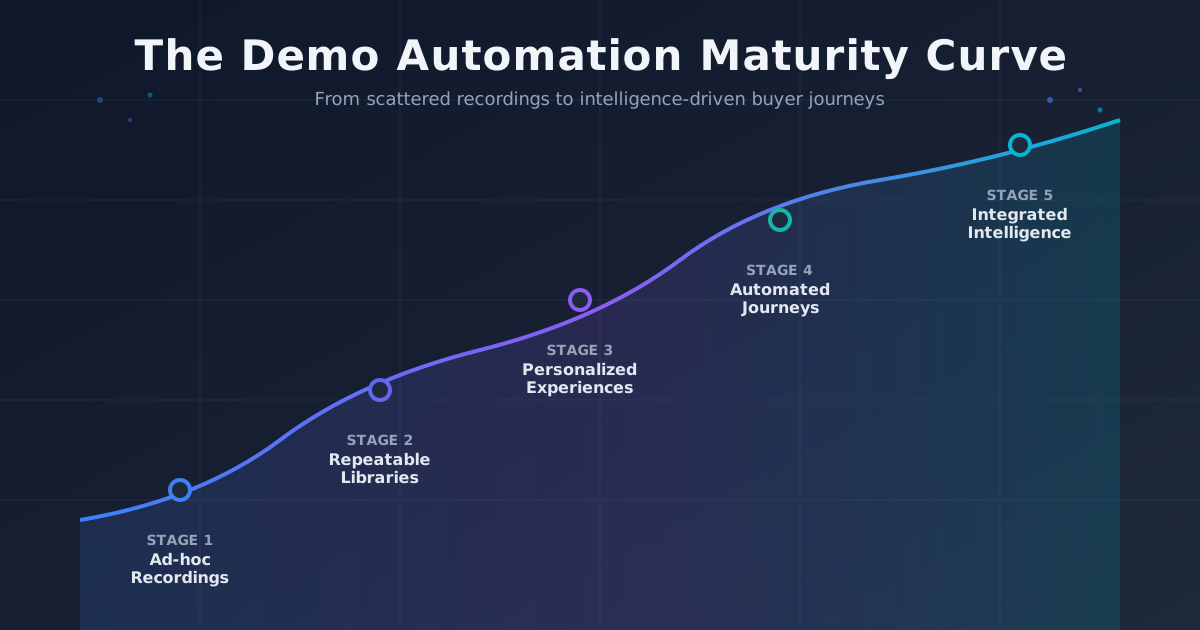
In this guide we break down the five stages of the demo automation maturity curve, adapted from industry research, and translate them into the context of LiveDemo.ai. You'll learn how to diagnose your current stage, what growing pains to expect, and the moves that will help you graduate to the next level without losing momentum.
Why Demo Automation Needs a Maturity Model
Scaling demos isn't just about tooling—it's about repeatability, buyer control, and insight. Teams evolve from one-off recordings to holistic demo systems because:
- Buyers demand self-service: They want to explore on their own schedule and share experiences with stakeholders.
- Sales teams need consistency: Every rep should deliver the same high-quality story without hours of prep.
- Marketing needs insight: Engagement data from demos informs campaigns, messaging, and product priorities.
- Customer success needs scale: Interactive walkthroughs double as onboarding accelerators and renewal assets.
Understanding the maturity curve helps you prioritize the right investments at the right time—so you can build momentum instead of technical debt.
Stage 1 — Ad-hoc Recordings
What it looks like: Demos live in scattered Loom links, PowerPoints, and homegrown walkthroughs. Every new feature release triggers a fresh recording sprint. There is no single source of truth.
Symptoms:
- Reps customize manually for every pitch.
- Marketing owns zero visibility into which demos are actually used.
- Security reviews stall because assets are tied to real customer data.
Risks: Prospect journeys feel inconsistent, and the most up-to-date story depends on who recorded last week's video.
How LiveDemo.ai helps: Start by capturing core flows with our Chrome extension and publish them as interactive demos. You immediately gain version control, editability, and the ability to anonymize data without re-recording.
Stage 2 — Repeatable Libraries
What it looks like: Teams centralize demos into a shared library. Assets are tagged by industry, persona, and funnel stage. Basic analytics show which demos get opened.
Symptoms:
- Sales enablement curates “best of” demos for different use cases.
- Marketing embeds demos on landing pages and resource hubs.
- Customer success reuses marketing demos for onboarding emails.
Risks: Without interactivity, demos still feel linear. Updates require re-recording, slowing down go-to-market teams when messaging changes.
How LiveDemo.ai helps: Convert static recordings into interactive demos with hotspots, branching, and embedded forms. Use folders and permissions to organize libraries while letting anyone remix steps without touching the source capture.
Stage 3 — Personalized Experiences
What it looks like: Demos adapt to buyer priorities. SDRs send personalized snapshots, marketers build persona-specific versions, and success teams launch role-based onboarding stories.
Symptoms:
- Teams stitch together demo “playlists” depending on the buyer's needs.
- Email nurture streams include embedded interactive moments.
- Sales engineers save time by cloning high-performing flows instead of starting from scratch.
Risks: Personalization becomes time-consuming if managed manually. Without governance, messaging divergence creeps in.
How LiveDemo.ai helps: Our step-level editing lets you duplicate a base story, swap data, and publish variants in minutes. Dynamic variables personalize names, industries, or metrics automatically. Guardrails ensure brand consistency across teams.
Stage 4 — Automated Buyer Journeys
What it looks like: Interactive demos orchestrate themselves. Prospects self-select their path based on role, use case, or pain point. Engagement data syncs with CRM, triggering alerts, tasks, and next-best actions.
Symptoms:
- Website visitors choose their own adventure demos tailored to their segment.
- Product-led growth teams track which steps drive trial activations.
- Sales receives instant scoring data when a champion completes a high-intent flow.
Risks: Automations can overwhelm if you lack clean data. Without clear ownership, demos drift out of sync with roadmap changes.
How LiveDemo.ai helps: Native integrations push engagement signals into HubSpot, Salesforce, and Slack. Our API lets you trigger demos from lifecycle campaigns, while scheduled reminders ensure owners refresh key journeys when product updates ship.
Stage 5 — Integrated Demo Intelligence
What it looks like: Demo insights loop directly into product, revenue, and customer teams. You correlate demo behavior with pipeline velocity, expansion, and retention. Interactive experiences power the entire lifecycle—from acquisition to onboarding to renewals.
Symptoms:
- Marketing, product, and sales share a unified dashboard of demo intent signals.
- Product teams validate feature adoption through embedded demos inside the app.
- Revenue operations uses demo engagement scores in forecasting models.
Risks: Governance must be intentional: without clear processes, the system can become noisy. Stakeholders need executive sponsorship to keep demo intelligence actionable.
How LiveDemo.ai helps: Advanced analytics map demo consumption to pipeline stages. Role-based workspaces keep data clean, while exports feed BI tools. Our roadmap alignment checklist makes sure every major release ships with matching demo assets—automatically.
How to Move Up the Curve
Progressing along the maturity curve doesn't require a big-bang replatform. Instead, adopt an iterative, revenue-backed approach:
- Diagnose your stage: Audit current demo assets, owners, and tooling. Identify quick wins that reduce rework.
- Pilot with one team: Choose a sales pod or product line to prove impact before rolling out globally.
- Enable cross-functional owners: Marketing, sales, and success should co-own demo strategy. Shared dashboards keep everyone aligned.
- Measure what matters: Track demo-influenced pipeline, time-to-first-demo, and engagement depth. Use insights to guide investment.
- Automate responsibly: Introduce personalization, scoring, and lifecycle triggers once foundational content is in place.
LiveDemo.ai Checklist for Each Stage
- Stage 1 → Stage 2: Capture your core product tour with LiveDemo.ai, publish it in a shared workspace, and replace outdated Loom links.
- Stage 2 → Stage 3: Build persona-based branches with conditional steps and embed them in marketing journeys.
- Stage 3 → Stage 4: Connect demos to HubSpot or Salesforce, trigger alerts on high-intent actions, and feed reps with real-time context.
- Stage 4 → Stage 5: Layer in analytics exports, create executive dashboards, and align demo updates with product release cadences.
Key Metrics to Watch
Regardless of stage, keep an eye on the metrics that prove demo automation is moving the needle:
- Demo-to-opportunity rate: How many interactive demo views convert to pipeline?
- Time-to-first-demo: Are prospects getting hands-on early enough in the journey?
- Replay depth: Which steps get re-watched or skipped entirely?
- Team efficiency: How many hours are saved per rep by reusing automated demos?
- Revenue impact: Do accounts engaged with demos have higher win rates, ACVs, or retention?
Final Thoughts
Climbing the demo automation maturity curve is less about buying a shiny platform and more about building a habit of buyer-led storytelling. LiveDemo.ai gives you the capture, editing, personalization, and analytics stack to move steadily from ad-hoc demos to an integrated, intelligence-driven program.
Whether you're just replacing Loom links or orchestrating fully automated demo journeys, the next step is always about giving buyers more control while equipping your team with better insights.
Try LiveDemo.ai Free →
No credit card required. Set up your first demo in under 10 minutes.